
Somewhere between the third bullying incident, the fourth bout of "school anxiety," or the twelfth time your child has come home saying lessons move too fast or too slowly, most parents start Googling the same phrase: is online school actually a real option for us?
It is. Home-educated numbers in the UK have grown from roughly 34,000 children in 2015 to well over 150,000 today, and a growing share of those families now choose a structured online school rather than going it alone. But the decision rarely feels simple in the moment. Parents worry about socialisation, about whether their child will "fall behind," about whether they're capable of supporting learning at home, and about what happens to future exams and university applications.
ATMO School put together this guide to answer the questions that actually keep parents up at night — not the marketing version of online learning, but what changes day to day, week to week, and what the first month genuinely looks like.
Why Families Actually Make the Switch
Before deciding whether online learning is right for your family, it helps to name the real reason you're considering it. The switch tends to fall into one of a few categories:
Wellbeing and anxiety. Some children aren't unwilling to learn — they're unable to cope with a classroom environment that overwhelms them, whether from bullying, social pressure, sensory overload, or generalised school anxiety.
Academic pace and fit. A one-size-fits-all timetable doesn't work for a child who races through maths but needs more time with languages, or who is ahead of their year group and under-stimulated.
Relocation or travel. Families living abroad, moving frequently, or supporting a child's sport, music, or performing career need a curriculum that travels with them.
Health or additional needs. Chronic illness, SEND, or recovery from burnout can make a rigid school day unworkable.
Simple flexibility. Some families just want more control over how the school day is structured — without any crisis driving the decision.
None of these reasons need to be dramatic to be valid. Understanding your reason matters because it shapes what you should be looking for in an online school — pastoral support, academic pacing, live lessons versus self-paced work, or exam-board alignment for GCSEs and A-Levels.
Mainstream School vs Online Learning: What Actually Changes
Parents often imagine online learning as "the same school, but on a screen." In practice, several things shift at once, and it helps to know which before you commit.
The daily structure loosens. Instead of a fixed bell schedule, most online schools work around a mix of live lessons, recorded content, and independent tasks. That flexibility is the whole point — but it only works if a new routine replaces the old one. Families who try to run online learning with no structure at all tend to struggle within a few weeks.
Your role as a parent shifts, not disappears. You are not becoming the teacher. Subject specialists still teach the curriculum, mark work, and run consultations. Your job moves from "get them to school on time" to "keep the week visible, notice when something's off, and stay in contact with teachers."
Socialisation requires intention. This is the one honest trade-off worth naming clearly: a physical school building creates incidental social contact whether a child wants it or not. Online learning doesn't. The good news is that most reputable online schools build in group projects, clubs, and live discussion sessions specifically to replace that — but it won't happen automatically the way it does in a corridor between lessons.
Assessment becomes more continuous. Rather than one big exam at the end of a term, well-run online programmes track progress through regular assignments and check-ins, which — done properly — actually catches gaps in understanding earlier than a single end-of-term test would.
Three Myths Worth Retiring Before You Decide
"Online school means my child will be isolated." Plenty of children in mainstream schools are lonely, excluded, or anxious despite being surrounded by 30 classmates a day. Social wellbeing depends far more on whether a child has real opportunities to build friendships than on the building they learn in — and a school with active clubs, speaking sessions, and student communities can offer more genuine connection than a large, impersonal classroom.
"Online school is the easy way out." Families who move to online learning specifically to avoid schoolwork altogether tend to struggle, because the flexibility that helps a motivated learner can just as easily let disengagement go unnoticed for longer. Online learning isn't a lighter workload — it's a different structure for the same curriculum.
"We'll lose access to exams and university pathways." A licensed online school teaching an accredited curriculum — whether that's a national programme or an international one like Cambridge IGCSE and A-Level — prepares students for the same external exams as a traditional school, and re-entry into mainstream or higher education later on is entirely possible.
Before You Start: A Practical Checklist
Once you've decided online learning is worth trying, a bit of groundwork in the weeks before your child's first day prevents most of the early stress.
Get clear on the curriculum path. Are you continuing a national curriculum, or moving toward an internationally recognised qualification such as Cambridge IGCSE and A-Level, which is accepted by universities in more than 160 countries? This decision affects subject choices, so settle it early rather than mid-year.
Handle the paperwork calmly. If your child is currently on a school roll, you'll typically need to notify the school in writing that you're withdrawing them for elective home education or enrolment elsewhere. Keep every email, letter, and phone call logged somewhere simple — a shared folder is enough. It removes one source of stress later.
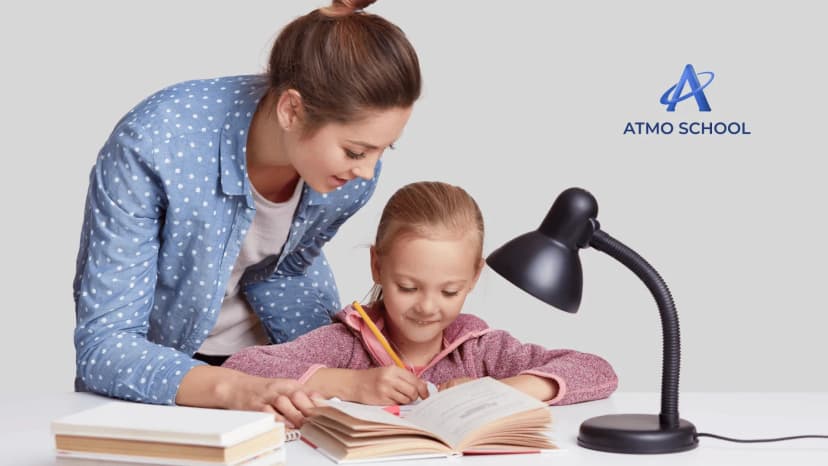
Set up a workspace that isn't the sofa. A desk, a chair that supports good posture, decent lighting, and a stable internet connection matter more than any fancy equipment. If your family lives abroad, as many of ATMO School's students studying outside their home country do, check time zones against any live lesson schedule before the first week, not during it.
Gather academic records. Recent school reports, current subject levels, and any SEND documentation help the new school place your child at the right level from day one, avoiding both boredom and overwhelm.
Pick a start date deliberately. Starting at the beginning of a term or half-term gives everyone a cleaner reset than dropping in mid-unit — though if wellbeing concerns are urgent, don't let a "perfect" start date delay a necessary change.
The First 30 Days: What "Normal" Actually Looks Like
This is the part most guides skip, and it's the part parents remember most vividly afterwards.
Week one is usually harder than expected — and that's normal. Even a child who was desperate to leave mainstream school can feel unsettled by the sudden lack of external structure. Don't read early wobbles as proof the decision was wrong; read them as proof that a habit hasn't formed yet.
Screen fatigue is real and manageable. Build in short movement breaks between lessons, and resist replicating a six-hour school day glued to a laptop. Good online programmes deliberately mix video lessons, interactive tasks, and offline work for exactly this reason.
Your child may test the flexibility. Some pushback against structure — sleeping in "just once," dragging out a task — is a normal part of adjusting to more autonomy. It's worth holding a light but consistent routine through this phase rather than abandoning structure at the first sign of friction.
You will probably second-guess yourself at least once. Almost every parent who makes this switch has a moment around week two or three where they wonder if they've made a mistake. It's rarely about the decision itself — it's the discomfort of a new system that hasn't proven itself yet. Give it a full term before judging the outcome.
By week four, a rhythm usually appears. Most families report that the biggest adjustment period is genuinely the first month; after that, the new routine starts to feel less like an experiment and more like simply how things work now.
Keeping Your Child Motivated and Socially Connected
Motivation in online learning tends to come from a mix of structure and ownership, not from constant supervision.
Make the week visible. A shared calendar or wall planner that shows lessons, deadlines, and breaks reduces the daily "what am I supposed to be doing" friction.
Protect a consistent morning anchor. Wake-up time, breakfast, and a short first task work better than an open-ended "start whenever."
Actively use the social features on offer. Speaking clubs, interest-based groups, live tutor sessions, and peer projects only work if your child actually joins them — encourage participation rather than assuming it will happen on its own.
Separate school time from free time, physically if possible. Closing the laptop and moving to a different room at the end of lessons helps signal that the school day has genuinely ended.
Tracking Progress Without Micromanaging
One of the more unexpected adjustments for parents is figuring out how closely to monitor things. A parent dashboard or portal — most established online schools offer one — lets you see grades, time spent on the platform, and teacher feedback without needing to sit beside your child through every lesson.
The goal is oversight, not surveillance. Checking in weekly rather than daily, and asking your child to talk you through what they're working on rather than just checking a screen, tends to build more independence than hovering does.
When to Ask for Help
A short list of signals worth acting on rather than waiting out:
- Consistent avoidance of specific subjects or live sessions, week after week
- A sudden drop in completed work with no clear explanation
- Visible withdrawal from the school's social or club activities
- Your own sense that something feels off, even if you can't pinpoint why
In each case, the first step is the same: contact your child's teacher or form tutor directly. A well-run online school should make this easy, not something you have to chase.
Frequently Asked Questions
Is online school right for my child?
It tends to suit children who need flexibility, are dealing with anxiety or bullying in a traditional setting, have additional learning needs, or whose families travel or live abroad. It works less well for children whose main motivation to leave is avoiding schoolwork altogether, or in homes where no adult can offer any daytime oversight, particularly for younger students.
How does online school actually work day to day?
Most programmes combine live lessons with a teacher, recorded video content, interactive tasks, and regular check-ins or assessments — all accessed through one platform, with a schedule that's more flexible than a traditional school day but still has structure.
What are the real pros and cons of online school?
The main advantages are flexibility, personalised pacing, and often more contact time with individual teachers. The main trade-off is that socialisation takes intentional effort rather than happening automatically — which is manageable, but worth planning for rather than ignoring.
Can my child switch back to a mainstream or international school later?
Yes, provided the online school teaches an accredited, recognised curriculum. Grades and progress transfer, and qualifications like IGCSE and A-Level are recognised by schools and universities worldwide.
Making the Decision With Confidence
There's no single "right" moment to move from mainstream school to online learning, and no guide can remove the uncertainty entirely. What tends to separate families who thrive from families who struggle isn't the decision itself — it's whether they go in with realistic expectations, a plan for the first month, and a school that takes both academics and pastoral support seriously.
If you're weighing this decision for a child heading into their GCSE or A-Level years, it's worth exploring how ATMO School's international programme supports students through Cambridge-accredited qualifications recognised by universities in over 160 countries — with the flexibility online learning promises and the structure it needs to actually deliver on that promise.